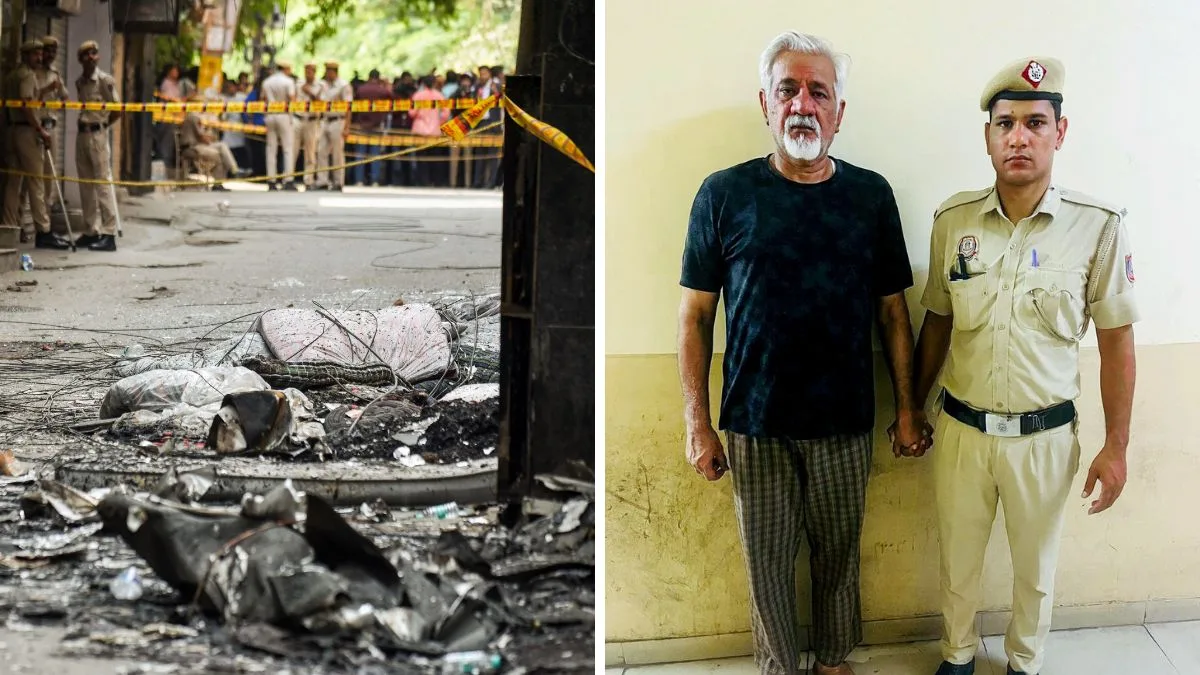
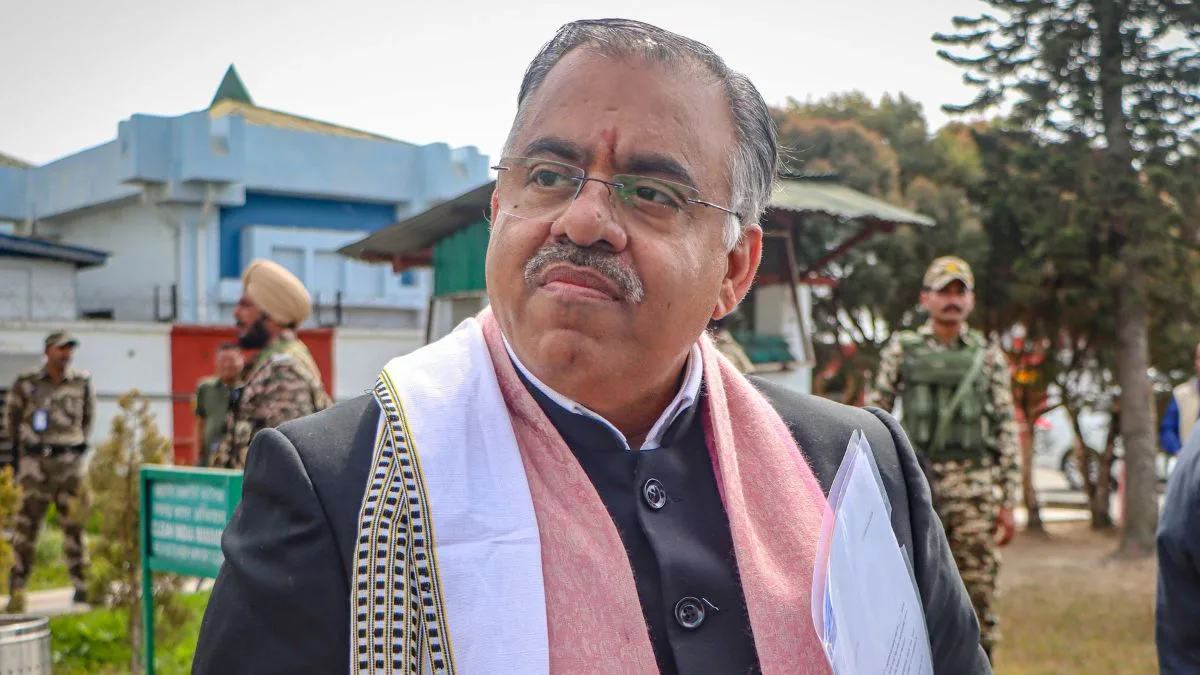
No link between DGEME Lt Gen Sahni and Thailand assault video, says Army
The clarification came after several posts circulated online, falsely linking a viral video from Thailand to the senior Indian Army officer.
The network of hideouts built by terrorists in an area of about 150 sq km, found during this operation, was among the largest ever detected in the known history of insurgency in Jammu and Kashmir.




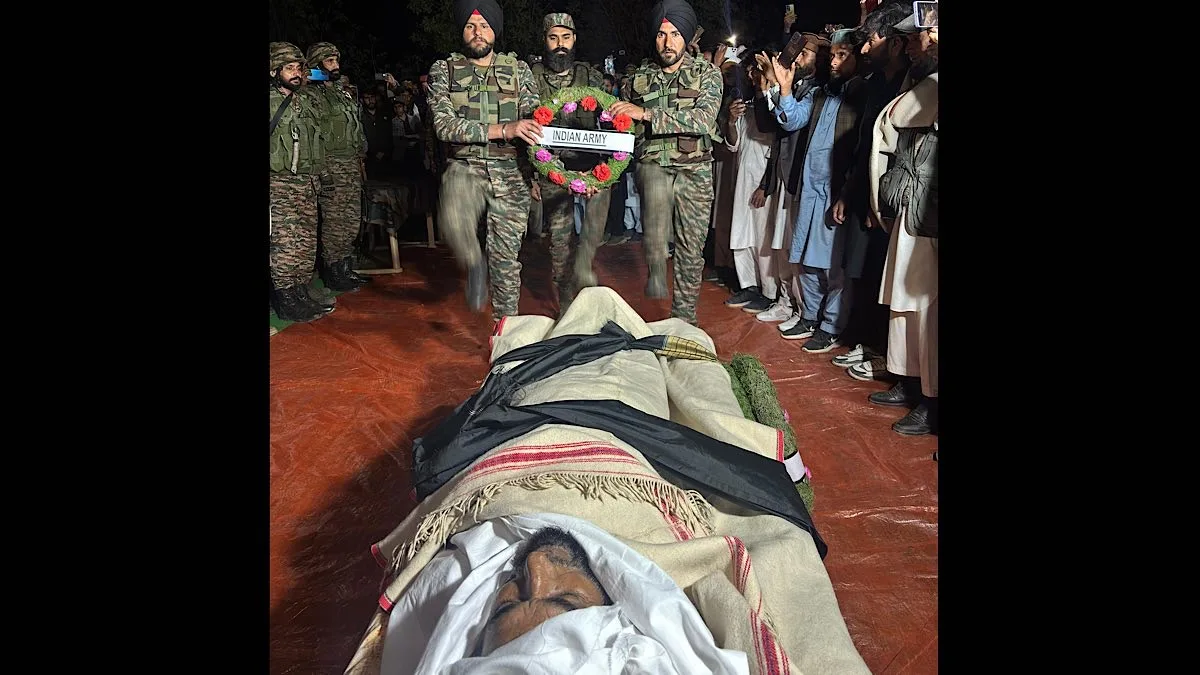
Photo:SNS
A chapter of quiet heroism came to a close as the Indian Army accorded a solemn, honour-laden farewell to a local resident, Fazal Hussain Tahir, who played a key role in the success of ‘Operation Sarp Vinash’ — which broke the back of Pakistani terrorists — in his native Murrah village in Poonch district.
The network of hideouts built by terrorists in an area of about 150 sq km, found during this operation, was among the largest ever detected in the known history of insurgency in Jammu and Kashmir.
Advertisement
A central figure in the decisive 2003 operation to flush out terrorists in the rugged Hill Kaka–Murrah belt, the 62-year-old Tahir passed away in Uttarakhand on April 22. His mortal remains reached home late at night to a sea of mourners, as soldiers and civilians came together to pay tribute to a man whose courage helped restore peace in the region.
Advertisement
Eyes went wet as Tahir’s legacy returned home draped in respect. He was a member of the Village Defence Committee (VDC) who guided the Indian Army to the deep forests where Pakistani terrorists had built concrete bunkers.
The White Knight Corps of the Indian Army described him as “a valiant son of the soil who stood shoulder to shoulder with his own troops during Operation Sarp Vinash in 2003. His daring spirit, unwavering courage and strong bond with the Indian Army remain a testament to his exceptional character. His indomitable valour will forever be etched in our hearts,” the Indian Army said.
He was a symbol of courage and unity, playing a pivotal role in the successful operation that eradicated terrorism in the Hill Kaka and Murrah areas of Jammu & Kashmir in 2003. His mortal remains were transported to Murrah late at night, and the Indian Army organised his last prayers, ensuring the presence of a large crowd.
The ceremony was conducted with the highest respect and military traditions. The local community and the Indian Army paid tribute to Tahir’s sacrifice, acknowledging his extraordinary courage in the fight against terrorism.
A wreath-laying ceremony was held and a two-minute silence was observed in honour of his memory. The people of Murrah and Kulali expressed gratitude for the Army’s support, as the region mourns the loss of a true hero.
Operation Sarp Vinash (Snake Destroyer) was an operation undertaken by the Indian Army to flush out terrorists who made concrete bases in the Hill-Kaka Poonch-Surankot area of the Pir Panjal range during April–May 2003. As many as 64 terrorists belonging to various jihadist outfits were killed in the operation.
Over several years, terrorists of groups like Lashkar-e-Taiba (LeT), Harkat-ul-Jihad-e-Islami, Al-Badr and Jaish-e-Mohammad (JeM) had been building up safe houses and bunkers in strategic areas of the region of Pir Panjal in Poonch, measuring 150 sq km.
The network of bunkers and shelters around the Hill Kaka region in Surankote numbered over a hundred and were intermingled with shelters used by local herdsmen. An extensive communications system using portable satellite phones was also found, which allowed the terrorists to contact handlers in Pakistan.
Advertisement